Plagued by a recurring, violent nightmare about her grandmother, Stefani (Kaitlyn Santa Juana) returns home to her father, brother, uncle, aunt, and cousins looking for answers. Eventually, she confronts her estranged grandmother Iris (Gabrielle Rose) and discovers that the nightmares are not hers at all — they’re actually Iris’ premonitions. Now, Stefani and her extended family find themselves trapped, trying to outwit Death’s plan.
The film promises to expand the mythology of the series, offering a new twist on Death’s familiar pattern. While it delivers some high-stakes set pieces and a handful of creative kills, the eerie suspense and psychological depth that once defined the franchise feel noticeably absent. Fans of the original Final Destination films may find this entry a less-than-satisfying return.
Keep reading for a spoiler-heavy review of the movie.
Reading Ahead
Final Destination 6: Bloodlines feels like a misstep so severe it doesn’t just fumble the formula; it forgets what made the original premise chilling in the first place. Where earlier entries in the franchise balanced grisly creativity with psychological dread, Bloodlines strips the concept of all its eerie nuance and replaces it with something that feels like an afterthought. The result is a film that is not only lazy, but weirdly disrespectful to the intelligence of its audience and to the franchise’s own internal logic.
No Longer Ironic or Iconic
What made the first few films compelling wasn’t just the elaborate death sequences (though those, of course, were a draw), but the sense that fate had a memory. The person who received the premonition was often plagued by fragmented visions or déjà vu-like glimpses into how death’s plan originally panned out. There was an emotional and narrative weight to the idea that reality had been slightly bent, and that Death, like a frustrated deity, was trying to correct the timeline while leaving behind sinister echoes of what should have happened. This interplay between survivor’s guilt, foresight, and the uncanny is where the real entertainment and uniqueness lived.
Bloodlines throws that all out in favor of a thin twist: Death isn’t only targeting the survivors of a disaster, it’s also targeting their families. The implication is that these offspring were never meant to exist because their parent should have died in some long-past incident. In theory, this could introduce a generational layer of horror — a meditation on inherited fate or cosmic debt — but the movie doesn’t explore any of that.
Crucially, Bloodlines removes what I consider one of the most interesting pieces of the formula: the way the character with the vision can sometimes recall or intuit how others were supposed to die. That eerie parallelism, the ironic nods to fate’s original plan, are completely gone. Because the characters weren’t present for an avoided disaster, there’s no original blueprint to pull from. So, Stefani can’t provide any insight into how these deaths are “meant” to unfold. It flattens her role and drains tension from the film. The deaths feel random and disconnected, which undercuts the whole premise of the franchise.
What Are We Doing Here?
I won’t pretend that the FD movies are known for their excellent plots and three-dimensional characters; that would be silly. However, the characters in this sixth installment continually make nonsensical and irrational decisions that further disconnect the audience.
Take Iris, for instance. After narrowly escaping death years ago, she’s spent decades in isolation, holed up in a fortified home, afraid that if she dies, her entire bloodline will suffer. So far, so fair. Stefani, experiencing the same disturbing nightmare, finds her grandmother’s home to confide in her and look for answers. At this point, we also learn that Iris was diagnosed with cancer two months ago, aligning with when Stefani’s premonition/nightmare started. The minute her granddaughter comes seeking answers, Iris virtually kills herself in front of her, essentially jumpstarting the chaos and defeating the entire purpose of her isolation. Her cryptic final line, “Seeing is believing,” doesn’t help much. If she really wanted to protect her family, why this sudden shift in philosophy? It makes no sense.

Then there’s the issue of why Stefani has the premonitions. Why her, specifically? Why not one of the family members closer to Iris? The film doesn’t care to explain — which is consistent with earlier films, sure — but it feels like a missed opportunity. If the franchise wants to expand, then explore the question: What determines who receives the vision? Is it chance? Bloodline? Guilt? Sensitivity to death? That’s fertile ground for a more interesting installment.
On Bad CGI and Bad Bludworth
Another point that bothers me is how terrible the CGI is for this movie. After the 3D craze that was evident in the fourth FD movie, the franchise never seemed to redeem itself. I’ll never understand just why the effects in these franchises are consistently so bad. I can speculate that it’s probably easier and less costly for folks in production to create a wild death at the editing stage with extensive CGI; however, as a franchise that has grossed about $800 million across all films, I can’t understand why those involved in its production and editing would voluntarily choose to repeatedly use bad quality effects. Perhaps that’s the point — those involved have continually made so much money (and expect to keep doing so through expanding the universe in unnecessary ways) that they know viewers will still watch their movies regardless, so why spend the extra money?
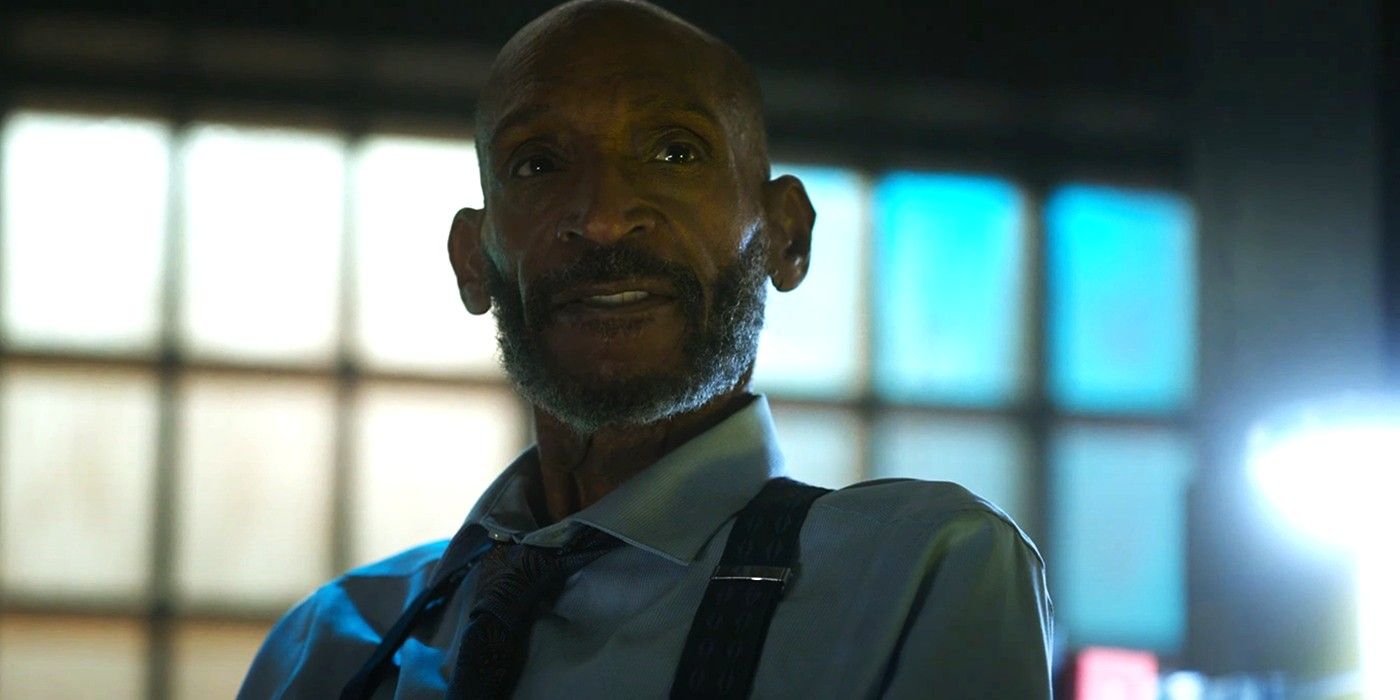
Adding insult to injury is what the film does to one of the franchise’s most enigmatic figures: the coroner, William Bludworth, played by Tony Todd in several installments. In the past, his character — with his ominous presence, cryptic advice, and seeming omniscience — functioned as a metaphorical stand-in for Death itself. His ambiguous status made him one of the franchise’s most unsettling and fascinating elements: was he Death incarnate? A cosmic observer? The ambiguity was the point, and it made his scenes genuinely interesting.
Bloodlines shatters that ambiguity by revealing him to be just another survivor, tied to the Sly View incident that now retroactively serves as the origin point for Death’s vendetta against certain bloodlines (I think?). Not only is this twist lazy, it also completely undermines everything that made his presence so menacing. He’s no longer an otherworldly force with unknowable motives: he’s just a guy with some morbid hindsight. It flattens a character who could’ve been used in a much more interesting way.
There are horror franchises that reinvent themselves by finding new angles on familiar material. This is not one of them. Final Destination 6 makes it clear that the franchise is running on fumes, mistaking continuity for substance and legacy for meaning.
The Only Okay Part
I did, however, like that, in the event of Bludworth and Iris, cancer was used as an alternative to the heinous and violent death they would have otherwise experienced at the Sky View. It’s revealed that both of the characters have cancer, and they’ve accepted that this will likely be what ends them. That makes you wonder: Is this Death’s way of managing to get them anyway? Death is almost always referred to as a sentient being throughout the entire franchise. So, does Death ‘give’ Iris and Bludworth cancer as a final attempt to correct the scales? Or is the cancer simply a result of these two human beings growing and living into late adulthood? If about 1 in 4 people develop cancer at some point in their life, does this take Death’s ‘choice’ and chalk it up to randomness and environmental factors? So! That was about the only thing I liked in this movie.
Final Thoughts
There are horror franchises that reinvent themselves by finding new angles on familiar material… this is not one of them. Final Destination: Bloodlines makes it clear the series is running on fumes.
If they really wanted to expand this universe, I think there were two rich paths to explore: lean into William Bludworth as Death incarnate, or examine why certain people are chosen to receive these premonitions in the first place. The two aren’t mutually exclusive — in fact, they could’ve complemented each other beautifully. Instead, we’re left with a flat, frustrating installment that kills the franchise’s potential more effectively than Death ever could.
As of August 2025, this movie is streaming on HBO Max.
 under review
Leave a comment